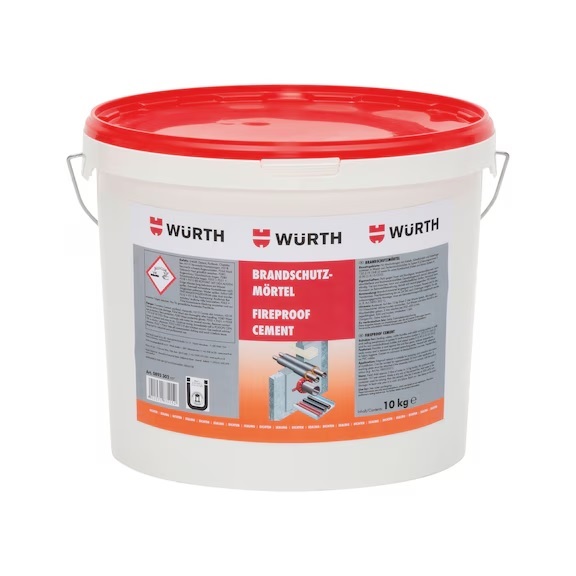
Würth offers a variety of firestopping coatings designed to prevent the spread of fire, smoke, and heat in commercial and industrial, and residential buildings. Their portfolio includes ablative, intumescent, and acrylic-based solutions for sealing joints and cable/pipe penetrations.
Here are the key descriptions of Würth firestopping coating products based on the search results:
1. Ablative Coating I / Fire Protection Coating FPMF
- Description: A water-based, halogen- and silicone-free, white coating used to seal mineral fiber boards in penetration seals.
- Function: It works by absorbing heat and preventing fire spread, suitable for both large openings and linear joints.
- Application: Applied with a brush, roller, or spray gun.
- Features: It remains flexible, allowing for movement in joints, and acts as a barrier against smoke and fire.
2. Fire and Acoustic Protection Acrylic
- Description: A single-component, intumescent acrylic-based sealant.
- Function: Specifically for fire-rated sealing of linear joints and, in some cases, penetrations in concrete or gypsum walls and floors.
- Fire Rating: Up to EI 120 (120 minutes).
- Features: Excellent soundproofing, paintable, UV-resistant, and provides a barrier against smoke.
3. Fire Protection Coating for Combination Partition
- Description: A universal, white, water-based coating for both indoor and outdoor use (on non-exposed, protected surfaces).
- Function: Designed to create a fire-resistant coating on mineral fiber boards used in mixed penetration seals (cables and pipes).
- Features: Resistant to weathering and aging, ensuring long-term protection.
4. Key Characteristics of Würth Firestopping Coatings
- Intumescent/Ablative Properties: Many of the coatings are designed to foam up or char when exposed to high heat (intumescent), providing insulation, while others, like the ablative coating, work by creating a protective, heat-absorbing barrier.
- Versatility: Suitable for various substrates, including concrete, masonry, and drywall.
- Easy Application: Designed for easy, fast, and often manual application in construction projects.
- Regulatory Compliance: Designed to meet European technical approvals (ETA) and local safety standards for fire-resistant joints.
Typical Application Areas
- Cable penetrations (single or bundles).
- Combustible and non-combustible pipes.
- Linear joints in walls and floors.
- Combination seal systems.